Grasp of Eternity · Public alpha · Case study

Can space combat deliver an action-RPG power fantasy?

The larger vision for Grasp of Eternity starts with a small ship and a single weapon, then lets the player fight, collect, scrap, craft, reposition weapons, expand the ship, and grow into power on an epic scale.

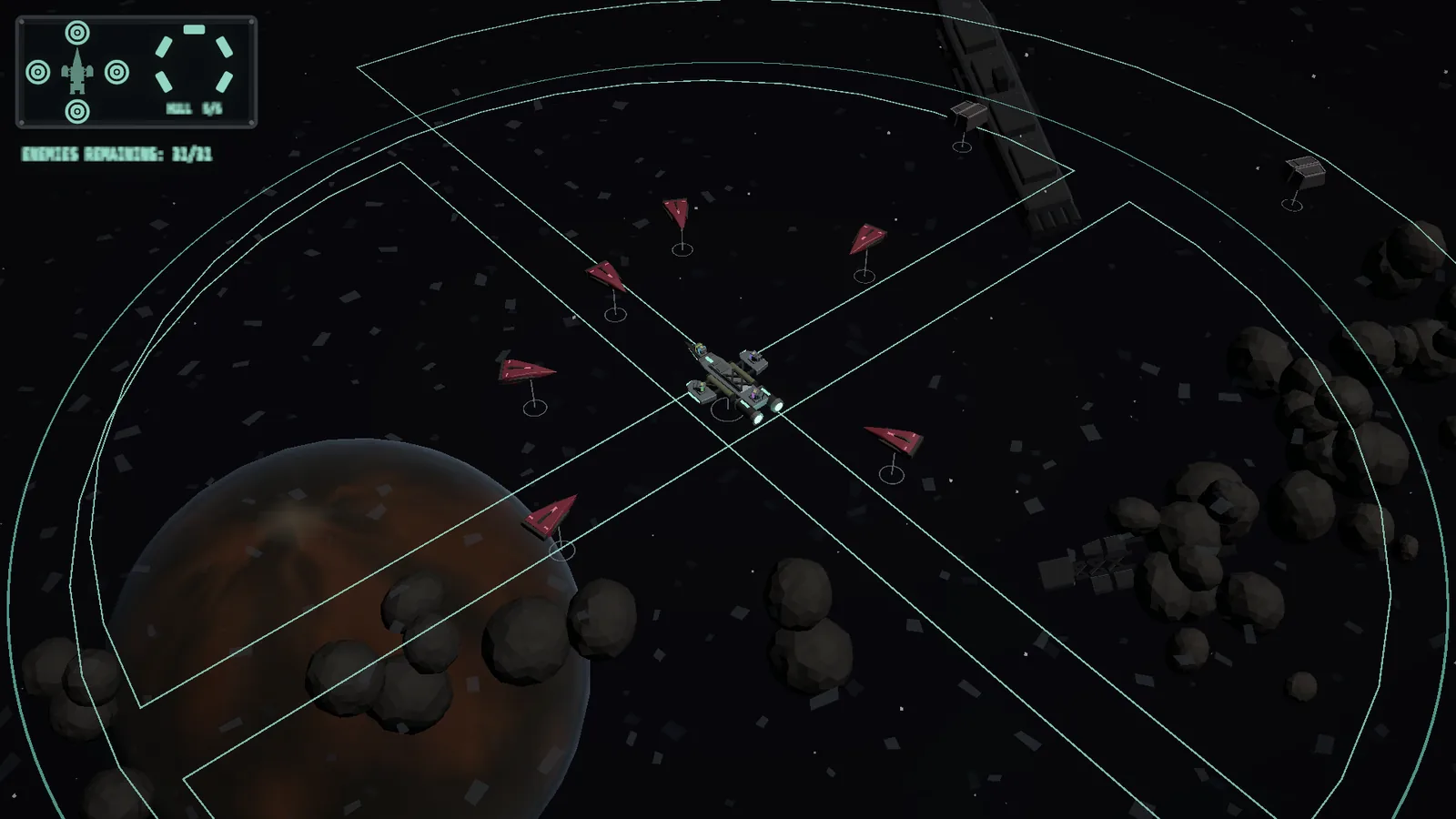
The player warship firing through pale cyan weapon arcs while hostile craft close among asteroids and wreckage.
Actual gameplay from the public alpha. The four weapon mounts cover different firing angles while the battlefield curves across a surface-aware combat plane.

The game question

Build the power curve into the ship itself.

Grasp of Eternity asks whether the build-making, loot decisions, and escalating power of an action RPG can live inside a player-controlled spacecraft. Weapons are physical parts of the ship: they can be crafted, upgraded, and moved between mounts, while the vessel itself becomes the visible record of progression.

That fantasy rests on an earlier technical question: can a spacecraft still feel responsive while it moves across flat and curved combat surfaces? The player should keep full two-dimensional control, but the level can follow a three-dimensional form. As the active surface bends or changes, the world shifts beneath the ship without turning the experience into a rail shooter.

The story gives that growth somewhere to go. Humanity pushes beyond its protected corner of space, takes power it barely understands, and draws stronger responses as it reaches farther into a dark-forest universe. That campaign remains a design direction; the public alpha proves only its first playable mechanical foundation.

The playable slice

Fight. Collect. Scrap. Craft. Upgrade. Fight again.

The alpha narrows the larger vision to one asteroid-field combat zone, one Hub, and one loop whose parts can be played, observed, and judged together.

  1. 01Fight

    Fly, aim, lock targets, and manage four weapon arcs while enemy formations apply different kinds of pressure.

  2. 02Collect

    Recover components and choose when to leave. The portal stays available until an awakened boss jams the route home.

  3. 03Scrap, craft, and upgrade

    Carry hull damage home, dismantle parts for scrap, craft weapons, and move them between Fore, Port, Starboard, and Aft mounts.

  4. 04Fight again with more power

    Launch the same persistent ship, defeat the boss, and turn its core into a permanent weapon modifier.

What exists now

One complete step on a much larger power curve.

01

2D control across a 3D world

Movement, targeting, pursuit, weapon arcs, and projectiles share an active flat or curved surface. The current battlefield proves the foundation for future levels that can cross a three-dimensional form without putting the ship on rails.

02

A persistent warship

Hull damage, installed weapons, mount positions, and earned modifiers survive the trip between combat and the Hub.

03

Progression with visible causes

Enemy drops reveal recipes, dismantling creates repair currency, and boss salvage becomes a Power Orb that permanently changes one weapon.

04

A unified presentation layer

The title screen, HUD, Hub, console, adaptive score, deterministic sound effects, hints, and settings use one restrained signal language.

Two halves of one ship

The loadout exists in the hangar and in the fight.

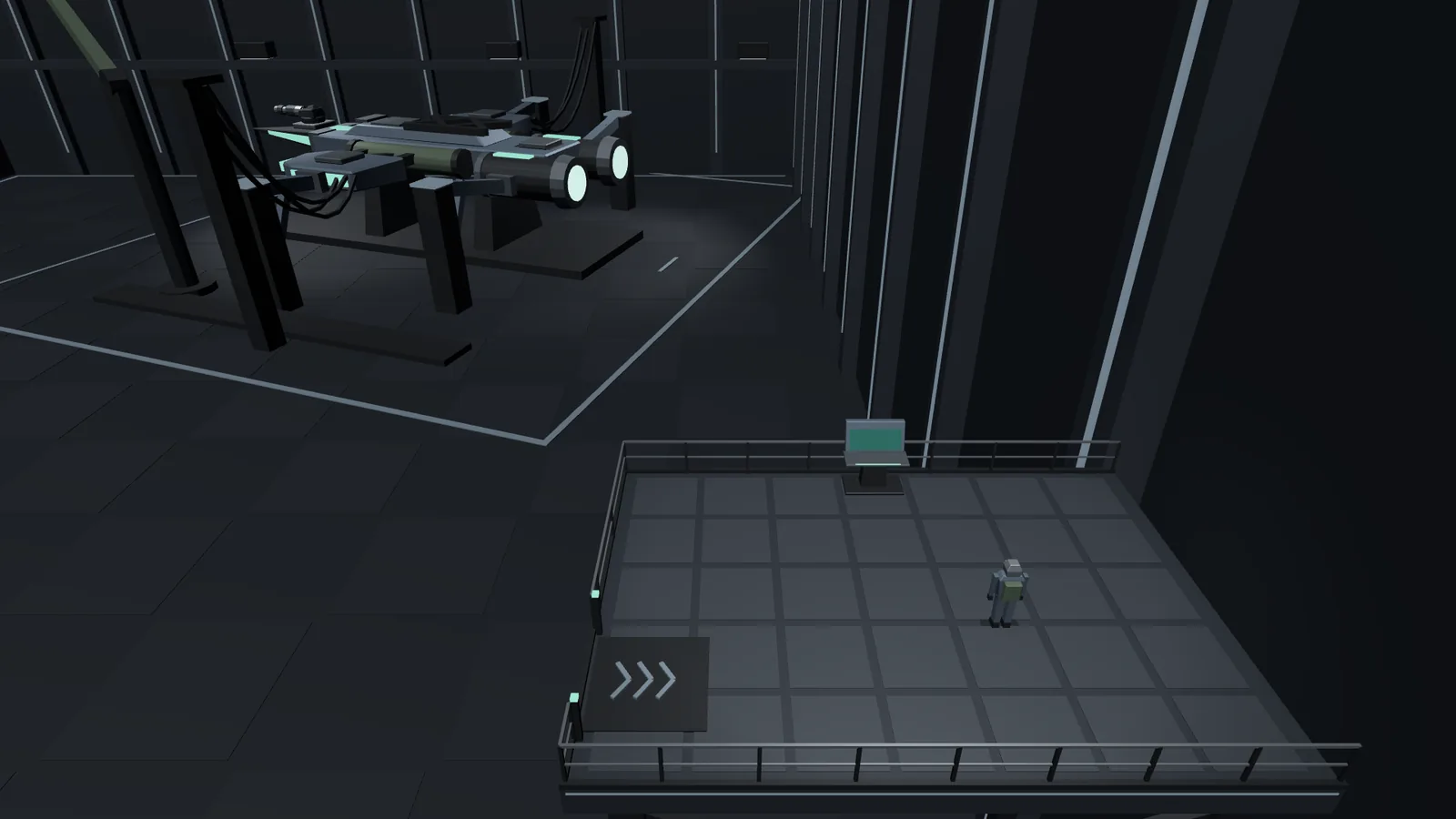
The Hub is not a disconnected menu. The docked vessel reflects the live equipment state, and the console lets the player reconfigure that same ship before returning to combat.

The player character standing on an industrial hangar platform across from the docked player warship.
The HubThe persistent ship waits across the bay while the player walks between the console and launch platform.
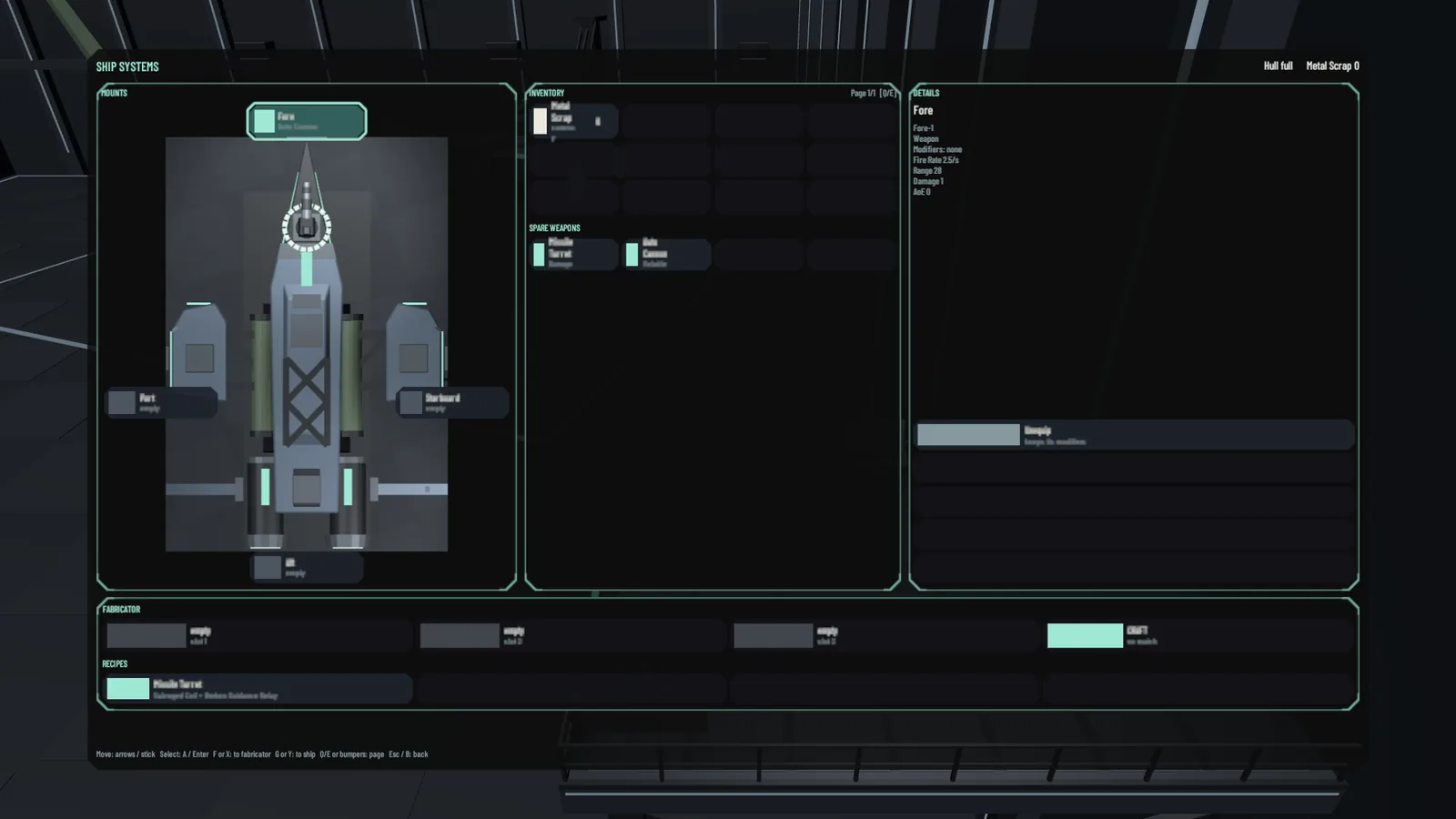
The ship systems console showing the warship, four mounts, inventory, weapon details, fabrication slots, and recipes.
Ship systemsThe live loadout, inventory, fabrication, repair, and mount choices are visible in one keyboard-and-gamepad interface.

What the public alpha proves today

The full loop can leave the repository and survive contact with a real release.

The evidence supports a playable public alpha. It does not turn the prototype into a finished commercial game or replace independent player feedback.

01

Direction accepted through the release gate

Jason accepted the presentation, onboarding, and full integration milestones after hands-on keyboard, mouse, and gamepad review.

02

The package was tested as a package

The 66 MiB Windows ZIP was extracted outside the project and completed the standalone frontend smoke path: 16 of 16 checks passed, with zero exceptions.

03

The release is inspectable

The public page names the platform, build date, file size, unsigned-app warning, extraction steps, and SHA-256 checksum instead of hiding release friction.

04

The remaining uncertainty is explicit

Independent cold testing is still open. Known first-launch, signing, and application-metadata limitations remain inputs to the next fix pass.

Verification discipline

Code, captures, standalone behavior, and human acceptance are different claims.

The project records automated checks, graphics captures, performance observations, fresh-build smoke tests, and hands-on judgment separately. A compiled script is not proof of scene wiring; a passing metric is not proof that an effect sounds or feels right; a deployment is not proof that a stranger can understand the game.

How it was made

One creative direction, implemented through many bounded tools.

I imagined the game, directed the combat feel and progression, made scope and aesthetic decisions, reviewed each milestone, and decided what was ready to keep or release.

Modern AI tools helped turn that direction into C# systems, Unity scene work, Blender-generated geometry, deterministic audio scripts, test infrastructure, documentation, and repeated implementation passes.

The collaboration is part of the project’s evidence: the useful question is not whether a tool produced code, but whether the resulting system can be inspected, tested, played, and accepted against an explicit intention.
What comes next

Let unfamiliar players find the weak links.

The next milestone is not more content. It is a cold-test cycle that observes where players hesitate, misread the objective, or fail to recover without coaching.

  1. 01

    Distribute the public alpha to outside testers using the current onboarding and no out-of-band instructions.

  2. 02

    Log every blocker, hesitation, wrong control press, and misunderstood objective.

  3. 03

    Turn the findings into a bounded fix-or-accept decision list before authorizing the next implementation milestone.

Grasp of Eternity is now public enough to test the first step in its larger question: does fighting, reconfiguring the ship, and returning with more power make players want to keep growing?